
Post
Watches as a Timeless Expression of Human Civilization and Future Direction-2026
May

Watches as a Timeless Expression
Watches are among the few human creations that remain relevant across centuries of change. They evolve with technology, adapt to culture, and reflect shifts in lifestyle, yet their core purpose remains constant. This stability within continuous transformation is what makes watches a unique symbol of human civilization.
At a deeper level, watches represent humanity’s attempt to give structure to something that cannot truly be controlled. Time flows independently of human will, yet watches allow people to interpret it, organize it, and live within its rhythm. This relationship between control and acceptance forms the foundation of how watches are understood and valued.
Historically, the development of watches mirrors the development of society itself. As human life became more organized, the need for precise timekeeping grew. Watches enabled coordination in work, transportation, communication, and social interaction. They contributed to the synchronization of modern civilization, allowing complex systems to function efficiently across regions and industries.
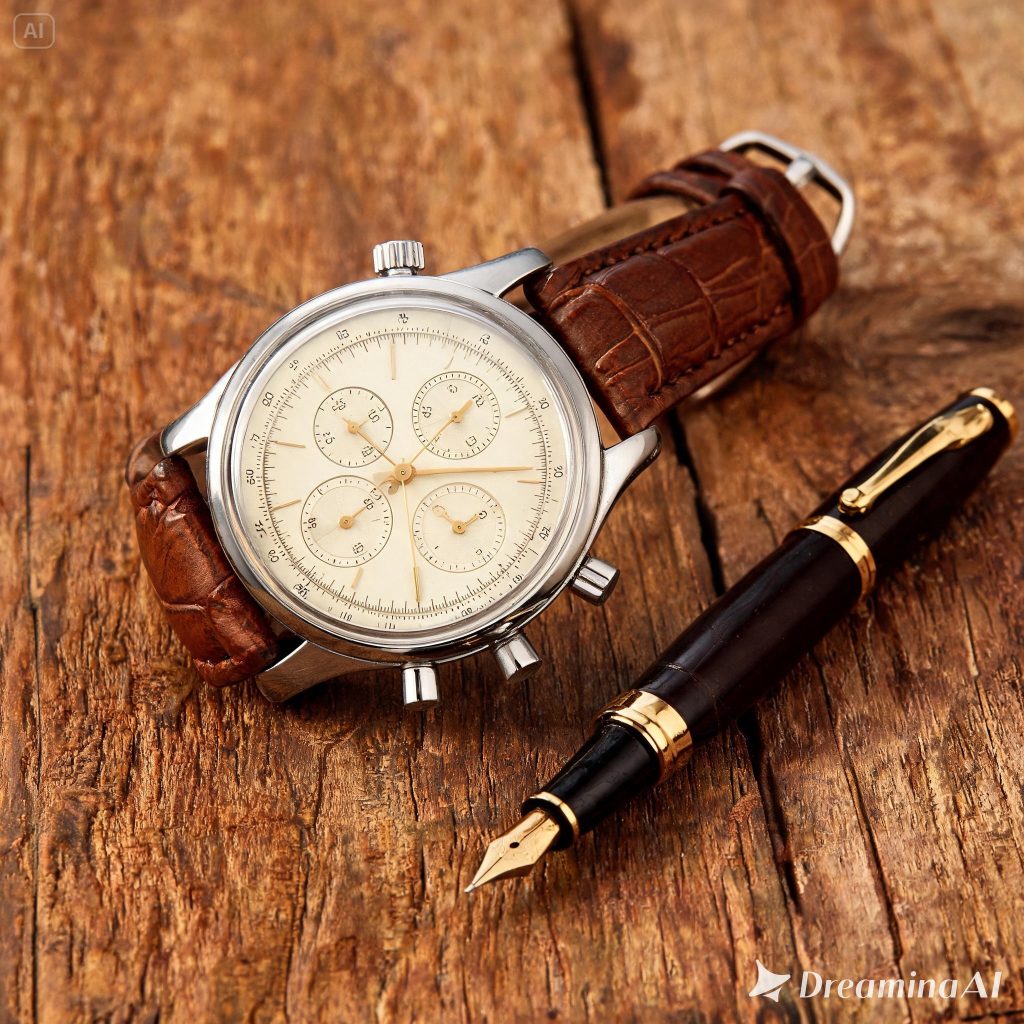
The mechanical watch, in particular, stands as a symbol of human ingenuity. It represents a period when precision was achieved through pure mechanical design rather than electronic computation. Every gear, spring, and wheel must work in harmony, creating motion from stored energy. This self-contained system reflects a philosophy of independence and resilience.
Even today, mechanical watches are admired not for necessity but for meaning. They represent continuity with the past and respect for traditional craftsmanship. Owning a mechanical watch is often seen as an appreciation of history, patience, and engineering discipline. It connects the wearer to a lineage of artisans who dedicated their lives to perfecting timekeeping.
The Stunning Mechanical Masterpiece Behind the Omega Speedmaster Moonwatch
On the other side of the spectrum, modern digital and smart watches represent adaptation to contemporary life. They integrate seamlessly with digital ecosystems, providing real-time data, communication, and health monitoring. These watches reflect a world driven by information, speed, and constant connectivity. They are designed for efficiency and responsiveness.
The coexistence of mechanical and digital watches highlights an important truth: human needs are not uniform. Some people value tradition and tactile experience, while others prioritize functionality and integration. Watches accommodate both perspectives, making them one of the most versatile categories of personal objects.
Emotion remains central to the meaning of watches, regardless of technology. A watch often becomes part of a person’s life story. It witnesses daily routines, achievements, struggles, and transformations. Over time, it absorbs emotional weight, turning into a personal archive of lived experience. This emotional accumulation cannot be replicated by purely functional devices.
Design plays a crucial role in shaping this emotional connection. A watch is not only worn but also observed repeatedly throughout the day. Its appearance becomes familiar, almost intimate. The way light reflects on the surface, the feel of the strap, and the movement of the hands all contribute to a sensory experience that strengthens attachment.
In modern design philosophy, simplicity has become increasingly important. Many contemporary watches focus on minimal elements, removing unnecessary complexity to highlight clarity and balance. This approach reflects a broader cultural shift toward mindfulness and intentional living. A simple watch encourages focus on essential elements rather than distraction.
At the same time, highly complex watches continue to exist as demonstrations of technical mastery. These timepieces showcase advanced mechanical systems, often combining multiple functions within a single structure. They represent the peak of horological achievement, where engineering and artistry merge into a unified creation.
The value of watches is also influenced by perception and rarity. Limited production, historical significance, and craftsmanship contribute to how watches are appreciated. However, beyond market value, there is personal value that cannot be measured. A watch may be priceless to its owner because of the memories attached to it, regardless of external valuation.
In social contexts, watches continue to function as subtle communicators. They express taste, lifestyle, and sometimes even philosophy. A person who chooses a simple watch may value practicality and understatement. A person who chooses a bold design may value expression and individuality. These choices form part of nonverbal identity communication.
Watches also interact with the concept of time awareness in psychological terms. Constant visibility of time encourages structured thinking and planning. It creates a sense of rhythm in daily life, helping individuals navigate tasks and responsibilities. This awareness often leads to improved time management and personal discipline.
In contrast, the absence of a watch can create a more fluid perception of time, where schedules are less rigid. Both approaches reflect different philosophies of living. Watches, therefore, do not simply measure time; they influence how time is experienced and interpreted.

The global evolution of watchmaking has created a diverse industry shaped by innovation and tradition. Different cultures contribute unique design languages and engineering philosophies. Some emphasize precision and technical excellence, while others focus on artistic expression and emotional storytelling. This diversity enriches the identity of watches worldwide.
Luxury watches occupy a special place within this ecosystem. They are often defined not only by materials or complexity but by heritage and craftsmanship. The creation of a luxury watch involves careful attention to detail, from movement design to final finishing. Each component is refined to achieve both functional excellence and aesthetic harmony.
However, modern luxury is no longer limited to exclusivity alone. It now includes meaning, sustainability, and emotional resonance. A luxury watch is increasingly expected to tell a story, reflect values, and maintain long-term relevance. This shift reflects changing consumer expectations in a more conscious and connected world.
Why the Rolex Submariner Is the Perfect Investment for Serious Collectors

Sustainability has become an essential consideration in contemporary watchmaking. Durable design, ethical sourcing, and repairability are now important principles. Watches are increasingly designed to last for decades rather than short cycles of consumption. This approach aligns with a broader movement toward responsible production and long-term thinking.
The psychological significance of watches continues to grow in a digital world filled with constant stimulation. A watch provides a stable reference point that does not demand attention but remains present. This subtle presence creates a sense of grounding and continuity in daily life.
Ultimately, watches are not defined by technology alone but by meaning. They represent time, but also memory, identity, discipline, and creativity. They exist at the intersection of past, present, and future, reflecting both human progress and human experience.
A watch is a small object, yet it carries a large idea: that time is valuable, life is finite, and every moment matters. Through this idea, watches remain timeless companions in a constantly changing world.
